Stay Informed: Updates, Events and Stories
Making It Discoverable: A Conversation with Cataloging Librarian Brian Morse

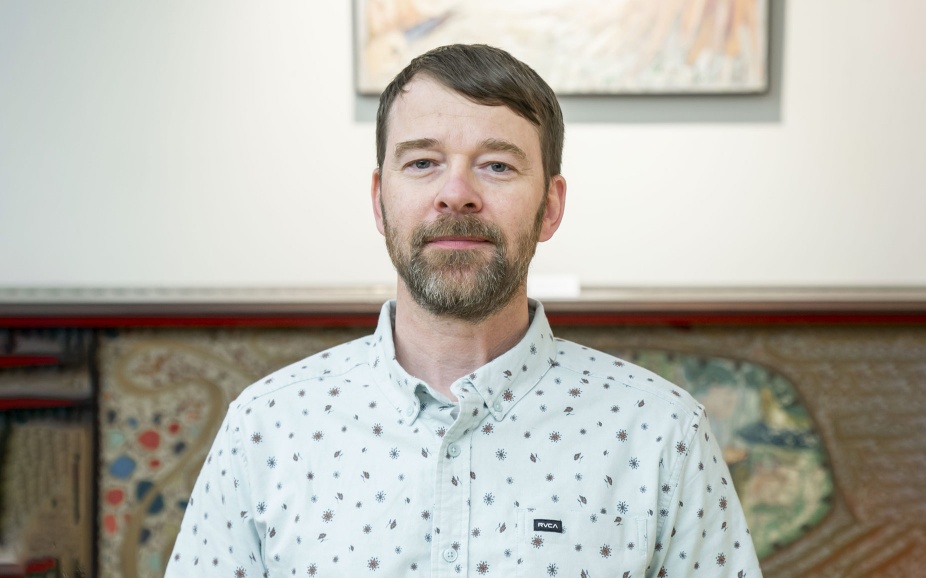
by DENISE WOLFE
Published August 4, 2026
Brian Morse's path to the library world wasn't a direct one. He earned an undergraduate degree in creative writing from SUNY Brockport, then spent time writing title insurance policies before deciding to change course entirely. He enrolled in the University at Buffalo's library science graduate program and never left the field.
Today, Morse serves as both cataloging librarian and cataloging team supervisor, a dual role he says keeps him engaged in both hands-on technical work and team leadership. As a cataloger, he spends his days ensuring the library's materials are easy to find, and as a supervisor, his days are shaped by his team's needs.
"My office, and Teams chats, are a revolving door of cataloging questions, conversations, links, procedures and policies," he said. Still, the collaborative nature of the team means he's never far from the technical work itself. "I am always in the mix as a practicing cataloger," he added.
Cataloging begins with a search of OCLC, a global library cooperative, for existing bibliographic records that can be enhanced to meet the library's standards, or, if none exists, creating one from scratch. Catalogers assign Library of Congress subject headings and classification numbers, and record details such as publisher information, copyright dates and physical descriptions, all in keeping with national standards including Resource Description and Access and the Library of Congress's Program for Cooperative Cataloging.
"Our goal is to make material discoverable through consistent, accurate metadata," Morse said.


A watercolor by Morse, replicating the original cover art for Big Red's Daughter by John McPartland, held in the library's Kelley Collection.
Records are then imported into Alma, the Library Services Platform (LSP), where items are prepared for the shelf.
Over the course of his career, Morse has watched the field shift substantially. BIBFRAME, a Library of Congress initiative meant to move bibliographic data toward a linked-data model, has been "a work in progress" for 15 years, he said. More recently, artificial intelligence has reshaped workflows industrywide. For example, Morse's team tested an AI cataloging product from OCLC that showed promise but ultimately crashed team computers and had to be removed.
"The nuances of cataloging are lost on the machine," he said, adding that catalogers continue adapting through ongoing training and testing.
Despite the challenges, Morse says the most rewarding part of the job has been unexpected: witnessing the passion with which his team operates and grows. He takes particular pride in watching early-career librarians on his team gain experience and confidence as practicing catalogers, developing into skilled professionals in their own right.

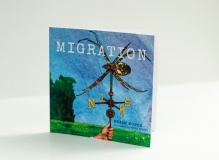
Morse's book, Migration
Outside of work, Morse calls himself "an insufferable hobbyist," and many of his pursuits have followed his daughter's interests as she's grown, from music and art to skateboarding. In 2016, he wrote Migration, a work of fiction told entirely through letters, illustrated by his friend Betsy Potter.
He also paints watercolors, including a piece replicating the cover art of Big Red's Daughter, a novel by John McPartland, found in the library's Kelley Collection. The original artwork was likely created by artist Barye Phillips, though he isn't credited. Morse plays acoustic fingerstyle guitar and is currently working on original instrumentals with a friend who plays banjo.