Stay Informed: Updates, Events and Stories
A World of Librarians
IFLA Brings the Global Library Community Together

by: EVVIVA WEINRAUB LAJOIE
Published August 24, 2026
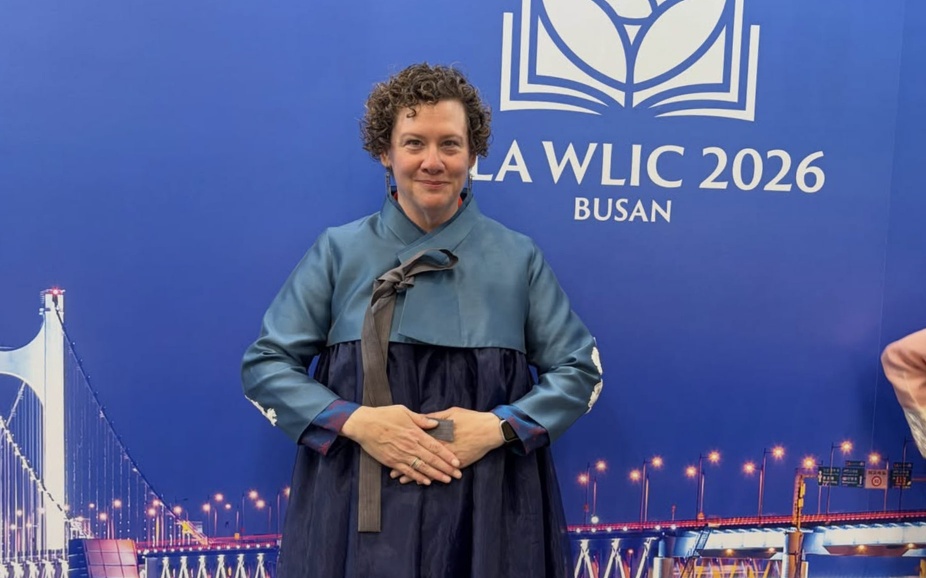
Twenty-two years after I last lived in South Korea, I returned for the International Federation of Library Associations and Institutions (IFLA) World Library and Information Congress, held August 10–13 in Busan. I lived in Korea from 2001 to 2004—not in Busan, but close enough to feel both nostalgic and astonished by how much had changed.
IFLA brings together thousands of library professionals from around the world. One attendee from Oman told me he had wondered whether presenters might find themselves speaking to an audience of two people. Instead, he encountered standing-room-only sessions—and discovered more librarians than he knew existed. He said it gave him hope. Honestly, same.
The Congress theme was “Libraries Powering Transformation,” and my schedule provided ample opportunity to transform myself into someone who apparently attends meetings continuously. As chair of IFLA’s North American Regional Division, I hosted the North American caucus and ran our division meeting. As vice chair of the Regional Council, I co-organized a workshop for IFLA officers, co-chaired a council session and moderated “Advocacy, Collaboration, and Transformation: Libraries Shaping the Future in Times of Global Change.” I also hosted a table at the Knowledge Management Knowledge Café.

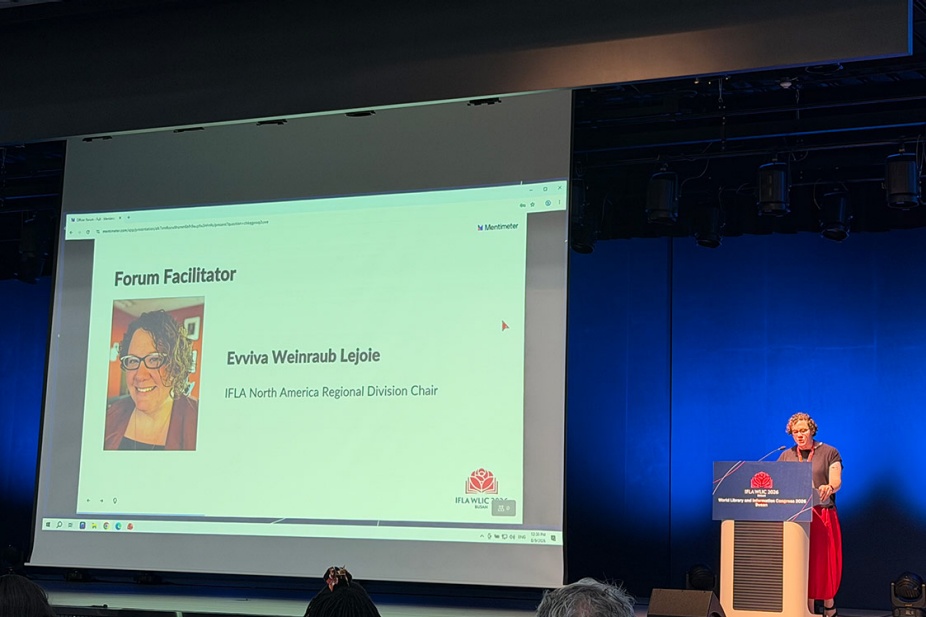
Evviva Weinraub Lajoie presenting during IFLA
The sessions matter, but so do the wonderfully serendipitous conversations between them. While sitting on the floor before a session on AI in library publishing, I met a colleague who had spent 27 years in Thailand working on repositories and information preservation. He had come to IFLA hoping to meet someone who understood the open-source communities working in libraries. Having spent much of my career at the intersection of library technology, digital preservation and emerging services, I knew the people, projects and communities he was trying to find. By sheer coincidence—or advanced librarian-finding technology—he sat down next to me.
The presentation I cannot stop thinking about came from our Māori colleagues at Archives New Zealand and the National Library of New Zealand. Using Awatea, a double-hulled voyaging canoe, they described how Indigenous knowledge can be embedded in institutional practice rather than added at the end like an inclusivity checkbox.
Their leadership team built an Awatea together, helping them understand and embody Māori worldviews through shared work. The presentation included singing and dancing, but its deepest impact came from that insistence on integration: changing the whole structure while preserving its essential values.
That is what IFLA offers at its best: new ideas, unexpected connections and reminders that libraries everywhere are navigating change together. Sometimes transformation begins with a presentation. Sometimes it begins because you sat down on the floor next to a stranger. Either way, you leave with something you did not know you needed.