Stay Informed: Updates, Events and Stories
An Odyssey in Progress

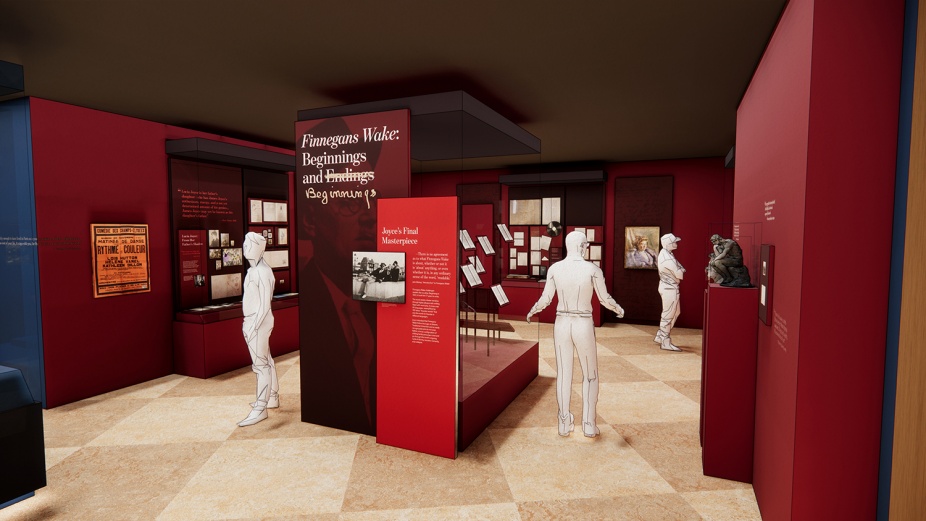
by JAMES MAYNARD, PhD
Published September 29, 2026
Since September 2024 the University Libraries and Campus Planning have been working on design plans for the UB James Joyce Museum with a team led by the architectural firm of Bostwick Design Partnership that includes Luci Creative as the exhibit designers. The purpose of this capital project is to create a vibrant exhibition and engagement center where a wide and inclusive audience can discover and experience the world-renowned resources of the UB James Joyce Collection, the world’s largest and most comprehensive collection of manuscripts and other materials by and about the renowned Irish writer.
Intended for people who may be new to Joyce as well as lifelong readers, the Joyce Museum will convey through manuscripts and other primary materials the compelling stories of Joyce’s literary life and work, his social and historical contexts, the enduring legacy of his infuence, and the history of the Joyce Collection. It aims to welcome and engage with a diverse audience composed of the local and regional communities of Western New York; the UB community of faculty, staff, students, and alumni; as well as Joyce enthusiasts and scholars, writers and artists, and cultural travelers from around the world.

Gallery 1: Visitors begin and end their journey in Gallery 1, an entrance/exit space inspired by the circular structure of Finnegans Wake that introduces Joyce’s life, legacy and the story of the UB James Joyce Collection.
While the rest of the Joyce Collection will remain with the Poetry Collection in 420 Capen Hall on UB’s North Campus as part of UB Libraries Special Collections, the Joyce Museum will occupy 11,000 square feet on the first foor of historic Abbott Hall—or what many remember as the original Lockwood Memorial Library—designed by architect E. B. Green on South Campus. To increase its accessibility, it will be located in the city of Buffalo, steps away from the NFTA public transportation hub, and nearer to the other arts and cultural institutions of Buffalo.
Organized around the theme of the Odyssey in Progress informed by his novel Ulysses, the present design of the Joyce Museum features six different gallery spaces in three adjacent areas. Visitors will follow a path through Joyce’s life and work that highlights the process through which his publications developed and the people who made them possible. Along the way, guests will be encouraged to connect with Joyce’s writing and to consider their own personal journeys and senses of home.

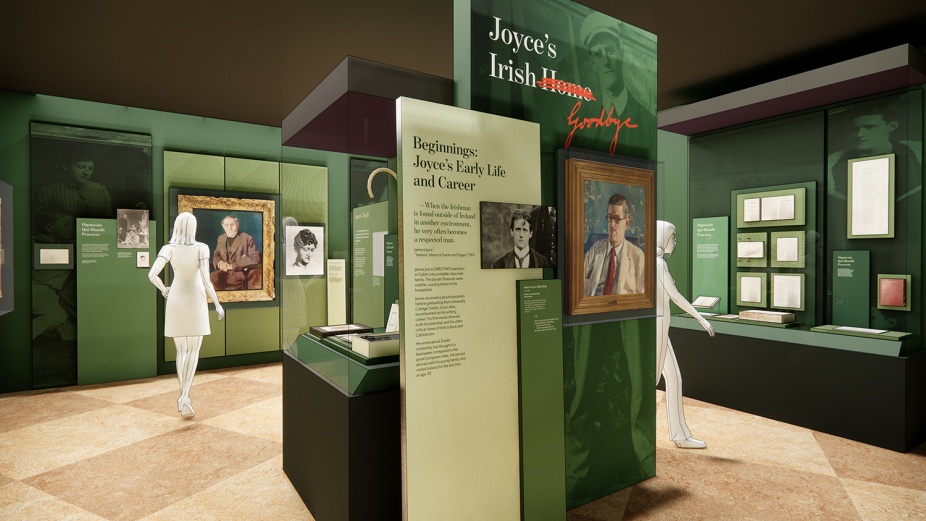
Gallery 2: Traces James Joyce’s upbringing in Dublin through personal effects, family photographs, manuscripts and editions of early works including Dubliners, Exiles and A Portrait of the Artist as a Young Man.
Galleries 2, 3, and 4 present artifacts from the Joyce Collection to illustrate the early, middle, and late periods of the author’s writing life. These three galleries constitute the museum proper and stand behind a threshold of wood and glass that evokes both the architectural detail of the building’s second-foor grand reading room—which opened in 1935, the same year that Charles Abbott founded the Poetry Collection—as well as the façade of Sylvia Beach’s bookstore Shakespeare and Company.
Echoing the circular structure of Finnegans Wake, Gallery 1 marks the museum’s entrance and exit points of Setting Out and Coming Home. Visitors will be introduced to Joyce, the UB James Joyce Collection, and the exhibition’s framework of the Odyssey in Progress. Together with Gallery 5, Gallery 1 is part of an open common area in the middle of the museum.
Gallery 2 introduces Joyce’s family and upbringing in Dublin as major infuences on his work. Visitors will encounter the writer’s personal effects (including his canes, glasses and passports), family portraits and photographs, as well as frst editions and manuscripts from his earliest publications such as A Portrait of the Artist as a Young Man, Dubliners, and Exiles.

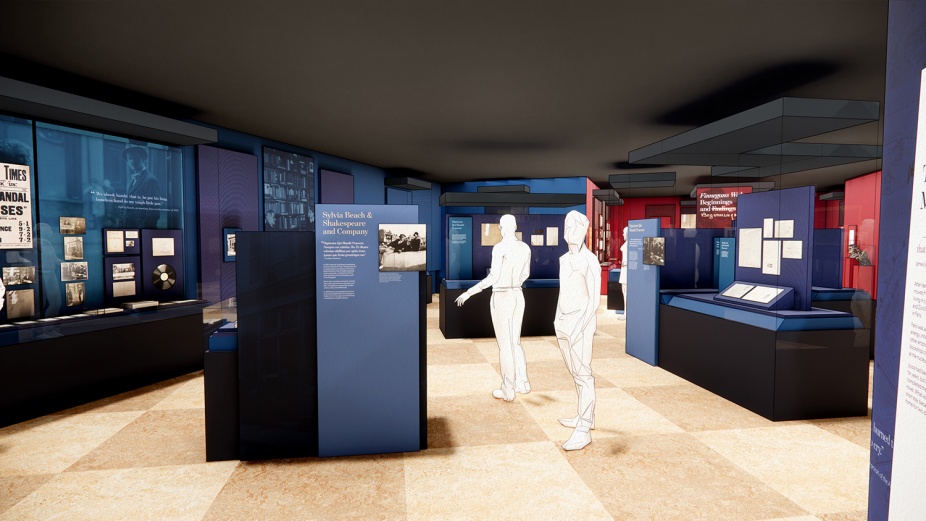
Gallery 3: Focused on the creation and publication of Ulysses, Gallery 3 highlights Joyce’s manuscripts, notebooks and proofs while exploring Sylvia Beach’s role in publishing the novel and the journey of the Joyce Collection to Buffalo.
Joyce’s Ulysses is widely considered to be the most infuential English-language novel published in the 20th century. Gallery 3 allows visitors to explore the novel’s complicated and contentious publication history, including its 12-year ban in the United States and subsequent piracy. UB’s notebooks, manuscripts, galley proofs, and other materials illuminate Joyce’s writing process and make this famously complex book more accessible. Central to this time in Joyce’s life was his relocation to Paris where he met Sylvia Beach. Without her, there would be no book-length publication of Ulysses as we know it. Gallery 3 also introduces the Buffalo Odyssey that explains how the Joyce Collection came to the University Libraries over time and introduces the people who made it all possible.

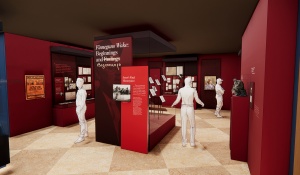
Gallery 4: Showcases Joyce’s experimental later years through rotating selections from the surviving Finnegans Wake notebooks, related manuscripts and works created by his daughter, Lucia Joyce.
Joyce’s last major work, Finnegans Wake, is also his most experimental and continues to challenge readers to this day. Gallery 4 highlights a rotating selection of the 69 surviving notebooks that Joyce used to compose the novel—all of which are in Buffalo—as well as other related manuscripts and publications. It also features the creative work of his daughter Lucia and his other late writings.
Stepping back into the common area in Gallery 5, guests will enter Your Odyssey, an interactive space where one can learn more about Joyce and the UB James Joyce Collection. As currently planned, visitors will be able to explore in greater depth UB’s collection of Joyce photographs and manuscripts using touchscreen digital displays and engage with diferent stations intended to foster a greater understanding of Joyce’s writing. In the back of Gallery 5 we are aiming to create a “Ulysses Unbound” room featuring an immersive audio-visual installation that brings the novel to life through animated excerpts of all 18 episodes. These accessible and entertaining visuals will speak to Joyce’s allusions, storytelling techniques, and classical underpinnings from the Odyssey.

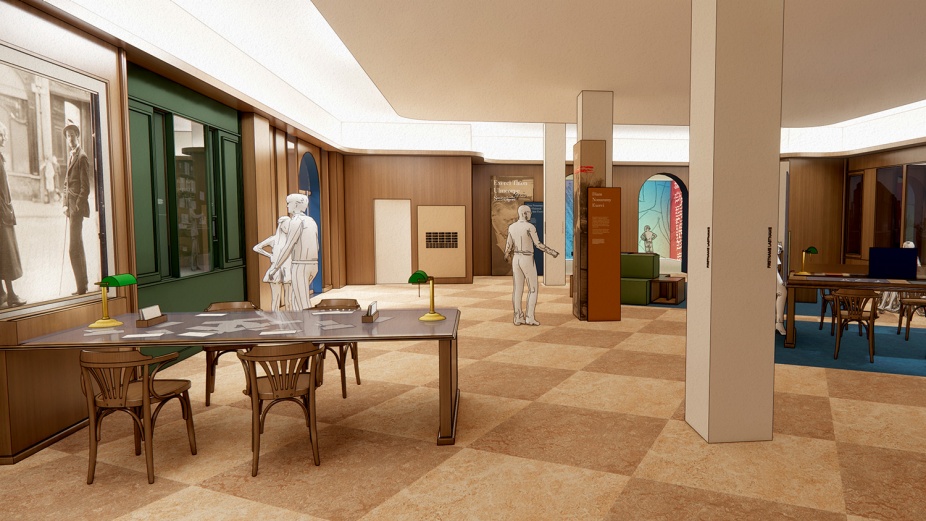
Gallery 5: An interactive experience, invites visitors to explore Joyce’s writing and the UB James Joyce Collection through digital displays, hands-on learning stations and an immersive “Ulysses Unbound” audio-visual installation.
Gallery 6 is a fexible multipurpose room that can be confgured in diferent arrangements for presentations, instruction, and other community events and gatherings. It is also the space in which we hope to accommodate visits from other area schools. Just as importantly, with additional casework it ofers a great opportunity to present temporary exhibits that will complement and expand the range of stories told in the more permanent displays in Galleries 2, 3, and 4.

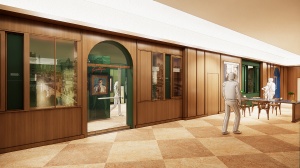
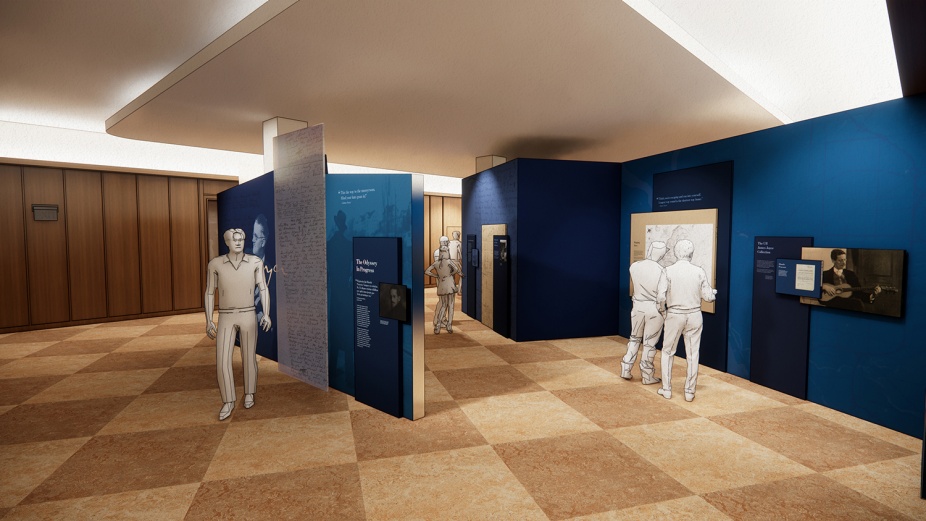
Featuring artifacts from the Joyce Collection, Galleries 2, 3 and 4 are located behind a wall of wood and glass.
Looking ahead, we expect to complete the design phase this spring and review bids for general construction in June with the hope of breaking ground as early as January 2027. Given the number of variables and contingencies involved, we don’t have a firm opening date established yet, but current projections are for some time in 2028. Meanwhile, we continue to promote the project and raise excitement for it through a wide range of community events and are also in the process of hiring a James Joyce Curator. Truly, we could not be more excited for the future of the James Joyce Museum as our goal is nothing less than to invite the entire world to experience James Joyce at the University at Buffalo.
Learn more about UB’s James Joyce Collection and make a gift online.